
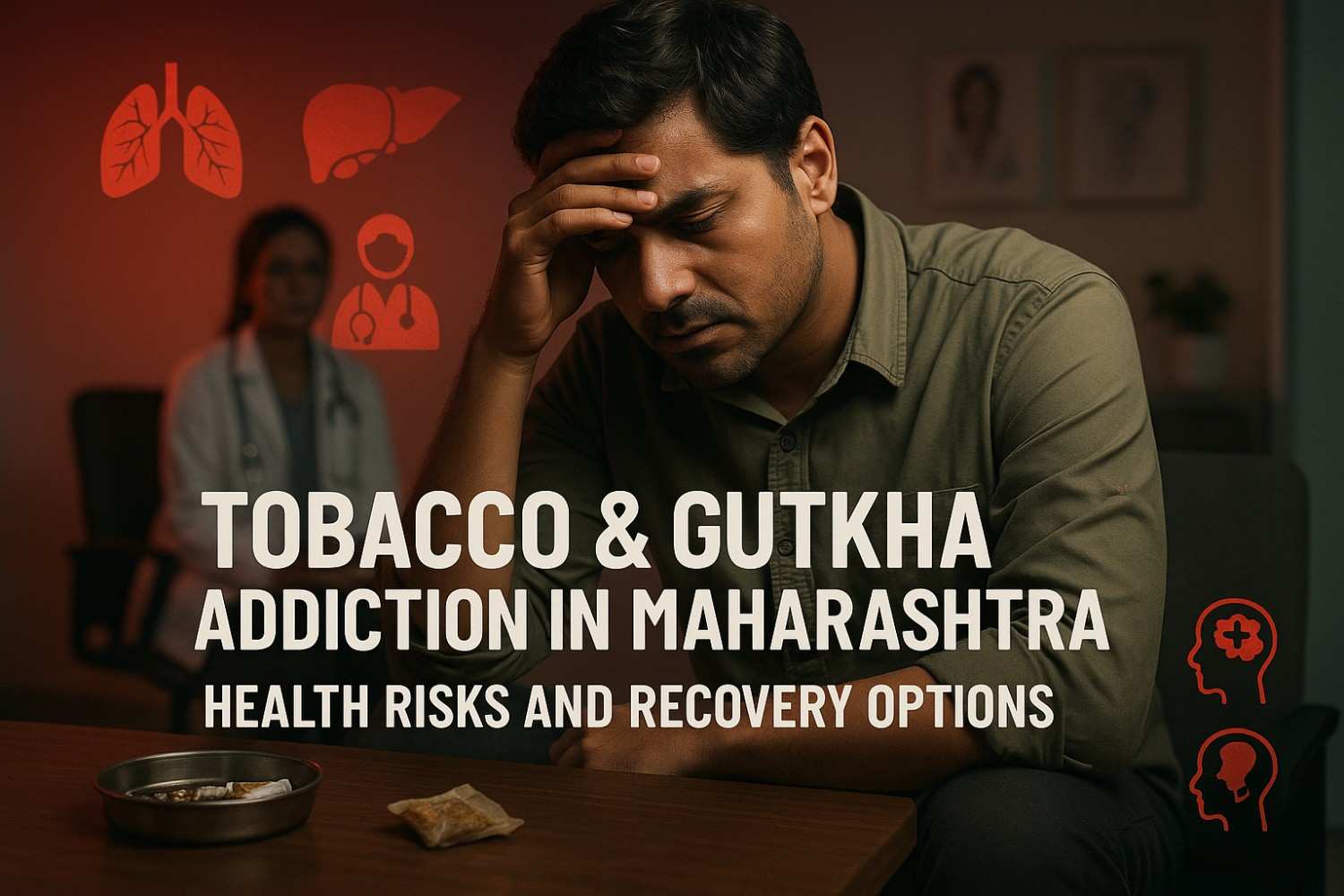
In Maharashtra, a quiet crisis is unfolding. An estimated 24 million people are addicted to tobacco, a number so large it’s hard to comprehend. This isn’t just a statistic; it’s a story of millions of lives, our friends, family, and colleagues, silently struggling with a powerful addiction. Especially with smokeless tobacco products like gutkha and khaini, which are deeply woven into our culture, the true danger is often overlooked. Many try to quit on their own, only to find themselves pulled back, feeling isolated and defeated.
But what if the problem isn’t a lack of willpower? What if it’s about not having the right tools and support?
At Calida Rehab, we believe that true, lasting recovery begins with understanding. It’s about looking beyond the habit to see the person and the reasons behind the addiction. This guide is for anyone in Maharashtra caught in the grip of tobacco or gutkha, and for the families who support them. We will walk you through the real health risks backed by data and, more importantly, show you the clear, compassionate, and medically supervised paths to recovery available right here in Pune and Mumbai. Your journey to a healthier, tobacco-free life is possible, and it starts with knowledge.
The Pervasive Grip of Tobacco and Gutkha in Maharashtra
To truly tackle tobacco addiction, we first need to understand its scale and the unique forms it takes in our state. The data reveal a landscape dominated by smokeless tobacco, with deeply concerning trends emerging among our youngest generation.
A Statistical Snapshot: The Reality on the Ground
The numbers paint a stark picture. According to the Global Adult Tobacco Survey (GATS-2), the most comprehensive recent data available, 26.6% of all adults in Maharashtra, that’s roughly 24 million people, use some form of tobacco.
But here’s the crucial detail: this isn’t primarily about smoking.
- An overwhelming 24.4% of adults in the state use smokeless tobacco.
- Only 3.8% of adults smoke cigarettes or bidis.
The most popular products are khaini (a mix of tobacco and slaked lime) and gutkha (a blend of areca nut, tobacco, and flavourings), used by 15.5% and 8.6% of adults, respectively. This preference for smokeless forms is a defining feature of addiction in Maharashtra.
The data also reveals a significant gender gap, with tobacco use being more than twice as common in men (35.5%) as in women (17.0%). However, the cultural acceptance of products like masheri (a tobacco tooth powder) means that addiction among women is still a major, often hidden, problem.
| Metric | Percentage / Number |
| Total Adult Tobacco Users in Maharashtra | 26.6% (approx. 24 million) |
| Male Tobacco Users | 35.50% |
| Female Tobacco Users | 17.00% |
| Smokeless Tobacco Users (All Adults) | 24.40% |
| Gutkha Users (All Adults) | 8.60% |
| Increase in Youth (15-17) Tobacco Use | Nearly Doubled (2.9% to 5.5%) |
| Average Age of Starting Tobacco Use | Decreased from 18.5 to 17.4 years |
The Alarming Youth Trend: A Looming Crisis
Perhaps the most frightening statistic is the sharp rise in tobacco use among teenagers. While overall adult use has slightly declined, tobacco consumption among 15 to 17-year-olds has nearly doubled, jumping from 2.9% to 5.5%. The age at which people first try tobacco has also dropped to just 17.4 years.
This isn’t just data; it’s happening in our schools. A survey in Mumbai municipal schools found that students as young as 7th to 9th grade were using products like gutkha and mawa. Another study from Tata Memorial Hospital revealed that nearly 30% of municipal school students were addicted to gutkha, with some chewing up to five packets a day.
This points to a generational cycle of addiction. Research confirms a powerful link: when children see their parents using tobacco, they are far more likely to start themselves. The failure to address adult addiction is directly creating the next generation of users. This transforms the personal decision to quit into a protective act for one’s children. At Calida Rehab, we see this every day, which is why our Addiction Treatment in Maharashtra includes family-focused therapy to heal these generational patterns.
Beyond the Numbers: The Socio-Cultural Roots of Addiction
Why is this habit so widespread? In Maharashtra, addiction is fueled by a mix of social and economic factors.
- Peer Pressure and Family Influence: Over 80% of users in one rural Maharashtra study cited peer pressure as the main reason for starting. The second biggest factor? Having family members who use tobacco.
- Socioeconomic Factors: Tobacco use is higher among rural, illiterate, and lower-income populations. This is often linked to higher stress, less access to health education, and the aggressive marketing of cheap products like gutkha.
- Cultural Norms: In some communities, tobacco use is deeply embedded in social rituals. It can be associated with hospitality, masculinity, or simply a daily routine passed down through generations, making it a very difficult habit to break.
The Illusion of the Ban: Why Gutkha is Still a Threat
In 2012, the Maharashtra government officially banned the sale and manufacture of gutkha, recognizing its severe health risks. However, this ban has been largely ineffective.
Gutkha remains widely available on the black market, often sold discreetly by vendors to regular customers. The tobacco industry has cleverly adapted by selling the components of gutkha, which are areca nut, tobacco, and lime, in separate packets, allowing users to mix them themselves and bypass the law.
This failure of policy highlights a critical truth: when a substance is this addictive and culturally ingrained, laws alone are not enough. It shifts the emphasis from external control to internal strength. This is why professional rehabilitation is not a last resort, but the most logical and effective strategy. It’s about building personal resilience, developing coping mechanisms, and addressing the deep psychological drivers of addiction, something a ban can never do.
The Unseen Toll: Devastating Health Consequences of Addiction
The casual way gutkha is consumed, often seen as a simple mouth freshener, hides a terrifying reality. The consequences are not minor; they are systemic, progressive, and often fatal. The damage starts in the mouth but spreads to nearly every organ, creating a full-body health crisis.
| Body System Affected | Specific Health Risk | Key Finding / Statistic |
| Oral Health | Oral Submucous Fibrosis (OSMF) | A pre-cancerous condition causing the inability to open the mouth. The risk of cancer is 400 times higher than for a non-user. |
| Oral Health | Oral Cancer | Maharashtra has some of the highest rates in India. 30-40% of all cancers in India are oral cancers, largely due to smokeless tobacco. |
| Cardiovascular System | Heart Attack & Stroke | Tobacco use is a major risk factor for Cardiovascular Disease (CVD), the leading cause of death in India. |
| Respiratory System | COPD & Lung Cancer | Smoking is responsible for 85-90% of COPD cases. Secondhand smoke also poses a major risk. |
| Reproductive Health | Infertility, Miscarriage, Birth Defects | Smokeless tobacco is directly linked to an increased risk of stillbirth, premature birth, and low birth weight in women and damaged sperm in men. |
The Assault on Oral Health: From Stained Teeth to Oral Cancer
The most immediate and visible damage from gutkha occurs in the mouth. This damage progresses through distinct, increasingly dangerous stages.
The First Sign: Oral Submucous Fibrosis (OSMF)
Long before cancer develops, many gutkha users experience a debilitating condition called Oral Submucous Fibrosis (OSMF). It is a pre-cancerous state where the soft lining of the mouth is replaced with hard, fibrous bands, making the tissue feel like leather. The first symptom is often a burning sensation when eating spicy food. As it worsens, it becomes difficult and eventually impossible to open the mouth, severely impacting one’s ability to eat, speak, and maintain dental hygiene.
OSMF is overwhelmingly caused by chewing areca nut, the main ingredient in gutkha. Most alarmingly, a person with OSMF is nearly 400 times more likely to develop oral cancer than someone who doesn’t use tobacco.
The Final Stage: Oral Cancer in Maharashtra
The link between smokeless tobacco and oral cancer is undeniable. India has the highest number of oral cancer patients in the world, accounting for a staggering 30-40% of all cancer diagnoses in the country, a direct result of gutkha and khaini use.
Within Maharashtra, the statistics are grim. The district of Gadchiroli, where over half the population uses tobacco, records the highest incidence of oral cancer in the entire country. Studies show that the extensive majority of patients diagnosed with oral cancer are tobacco chewers. This makes seeking Gutkha Addiction Treatment in Pune and other cities not just a choice, but a potentially life-saving decision.
Beyond the Mouth: A Full-Body Crisis
The toxic chemicals in gutkha, including nicotine and at least 28 known carcinogens, are absorbed into the bloodstream and wreak devastation throughout the body.
Cardiovascular Impact
Any tobacco product puts immense strain on the heart. Nicotine immediately increases heart rate and blood pressure, while other chemicals damage the lining of blood vessels. This accelerates the hardening of arteries, dramatically increasing the risk of a heart attack or stroke. In a nation already battling a crisis of heart disease and diabetes, tobacco use is like pouring fuel on a fire.
Respiratory Damage
For smokers, the damage is direct and severe, causing COPD and lung cancer. But the danger isn’t limited to the user. Secondhand smoke is a major cause of respiratory infections, asthma, and lung disease in non-smoking family members, particularly the vulnerable lungs of children and women exposed at home.
Reproductive Health Crisis
One of the most tragic consequences of tobacco is its impact on reproductive health.
- For Men: Tobacco use is a leading cause of erectile dysfunction. It also damages the DNA in sperm, which can lead to infertility, miscarriage, and birth defects in their children.
- For Women: Both smoking and smokeless tobacco reduce fertility. For pregnant women, it dramatically increases the risk of miscarriage, stillbirth, premature delivery, and having a baby with a low birth weight.
This reveals the hidden victims of addiction: the partners facing infertility and the children who bear the physical consequences. It reframes the decision to quit from a personal health choice to a profound act of protection for one’s entire family.
The Path to Recovery: Reclaiming Your Life from Addiction
The journey away from gutkha and tobacco is tough, but it is a path that millions have successfully walked. Recovery isn’t about willpower alone; it’s about using the right tools, support systems, and professional guidance to overcome both the physical and psychological chains of dependency.
Taking the First Step: Acknowledging the Need for Help
The first and most important step is admitting there is a problem and deciding to seek help. Many people try to quit “cold turkey,” fail multiple times, and end up feeling hopeless. This is not a sign of weakness. Nicotine is a highly addictive substance, and breaking its grip often requires a structured plan. Deciding to seek professional help is a sign of strength and a commitment to success.
A Spectrum of Support: Recovery Options in Maharashtra
A wide range of resources is available in Maharashtra to support you.
Public Health Initiatives
The government provides several excellent starting points:
- National Tobacco Quit-line (1800-11-2356): This is a free, confidential service with trained counselors who provide support in Marathi, Hindi, and English. One of the four national centers is located right here in Mumbai at the Tata Memorial Centre (TMC).
- Government De-addiction Centers: The state supports various de-addiction centers in government hospitals, including facilities in Pune and Kolhapur, under programs like the National Tobacco Control Program (NTCP).
Medical Interventions: Managing the Physical Dependency
- Nicotine Replacement Therapy (NRT): Products like nicotine gums and patches deliver a controlled dose of nicotine without the other harmful chemicals, helping to ease cravings and withdrawal symptoms. NRT is available at most pharmacies in India and was recently added to the National List of Essential Medicines, which should improve its accessibility.
Why NRT Alone Isn’t the Magic Bullet for Quitting Gutkha
While NRT can be a useful tool, it’s crucial to understand its limitations. It only addresses the physical addiction to nicotine. Research suggests it has limited effectiveness for smokeless tobacco and bidi users, the most common forms of tobacco use in Maharashtra. Furthermore, data shows that only about 4% of Indian smokers use any medication when trying to quit. This tells us that NRT is often not a complete solution. It helps the body, but it doesn’t treat the deep psychological and behavioural patterns that drive the addiction.
The Power of Psychological Therapy: Rewiring the Brain for Sobriety
This is where the real, lasting change happens. Since addiction is both physical and psychological, the most effective treatments address both.
- Cognitive Behavioral Therapy (CBT): CBT is one of the most effective therapies for tobacco cessation. It helps you:
- Identify Triggers: Pinpoint the situations, emotions, or routines that make you want to use tobacco (e.g., after a meal, feeling stressed).
- Challenge Faulty Thinking: Reframe the beliefs that keep you stuck, like “I need gutkha to focus” or “It’s the only way I can relax.”
- Develop Coping Skills: Learn new, healthy ways to manage cravings and stress without reaching for tobacco.
CBT provides the mental tools for long-term freedom, addressing the psychological dependency that NRT alone cannot.
The Calida Rehab Advantage: A Holistic and Medically-Driven Approach
While public resources are valuable, lasting freedom from addiction often requires a more integrated, intensive, and personalized approach. At Calida Rehab, we combine the best of medical science and psychological therapy in a supportive environment to treat the whole person, not just the addiction. Our centers for Tobacco Addiction Treatment in Pune and Mumbai are designed for healing and long-term success.
Beyond One-Size-Fits-All: Personalized Care
We know that every journey into addiction is unique, and so is the path out. At our centers in Pune (Baner) and near Mumbai (Karjat), we don’t use a one-size-fits-all program. We create a personalized treatment plan that addresses your specific physical, psychological, and social needs.
A Medically Supervised Foundation: Medical Detoxification
For many, the journey begins with Medical Detoxification. This critical first step is managed 24/7 by our expert team of psychiatrists and physicians. This constant medical supervision ensures your safety and comfort as your body clears itself of nicotine and other toxins, managing withdrawal symptoms in a controlled, supportive setting.
Integrating the Best of Therapy: A Dual Approach
Our treatment is built on a foundation of powerful, evidence-based psychotherapies. We integrate modalities like Cognitive Behavioral Therapy (CBT) and Dialectical Behavior Therapy (DBT) to help you understand the roots of your addiction, manage cravings, and rebuild your life on a healthier foundation. These sessions are conducted one-on-one and in groups, fostering both personal insight and peer support.
Healing the Whole Person: Holistic and Psychiatric Care
Recovery is more than just containing a habit; it’s about discovering new ways to live. We recognize that addiction often exists alongside other mental health conditions like anxiety or depression. Our unique blend of therapies is designed to heal the whole person:
- Expressive Therapies: Music, dance, and art therapy provide non-verbal outlets for processing emotions and reducing stress.
- Supportive Therapies: We emphasize the role of family and community. Our programs include Family Counseling to repair relationships and Support Groups that create a network of encouragement, reminding you that you are not alone.
Real Stories of Hope: Quitting is Possible
The path to healing can feel daunting, but countless people have walked it successfully. Their stories offer inspiration and practical wisdom for anyone starting their own journey.
From Despair to Determination: A Story from Pune
Consider Anup, a 45-year-old from Pune. He started chewing gutkha in college due to peer pressure. For years, it was just a habit. He tried quitting “cold turkey” several times, but the withdrawal symptoms, such as irritability and intense cravings, always pulled him back. He felt like a failure. His turning point came when he started feeling a constant burning sensation in his mouth and struggled to eat his favourite spicy food. Terrified after reading about OSMF and seeing the worry in his children’s eyes, he knew he couldn’t do it alone.
He sought professional help, entering a program that offered Gutkha Addiction Treatment in Pune. The journey began with medically supervised detox to manage the intense physical cravings safely. But the real breakthrough came with Cognitive Behavioral Therapy (CBT). He learned to identify his triggers, like the cup of tea after lunch or the stressful work call. His therapist helped him develop new coping strategies, like a short walk or a few minutes of deep breathing, instead of reaching for a pouch. Today, Anup is two years tobacco-free. His mouth has healed, and more importantly, he has reconnected with his family, free from the secret he carried for so long.
Why Willpower Isn’t Enough: Lessons from Former Users
Stories like Anup’s, and insights from many others who have successfully quit, teach us valuable lessons:
- Know Your “Why”: Constantly remind yourself why you are quitting, for your health, your family’s future, or your financial freedom.
- Identify Your Triggers: Keep a diary to note when and why you use tobacco. Understanding your habits is the first step to changing them.
- Build a Support System: Tell your family and trusted friends. Lean on professionals who can provide the tools you need.
- Be Kind to Yourself: Slip-ups can happen. Don’t see them as a failure, but as a lesson. Focus on ‘one day at a time’.
- Celebrate Your Victories: Acknowledge every milestone, whether it’s one day, one week, or one month tobacco-free. It supports your progress and keeps you motivated.
Your Journey to a Tobacco-Free Life Starts Today
The evidence is clear. Tobacco and gutkha addiction is a severe public health crisis in Maharashtra, causing devastating harm to millions. From the irreversible damage of Oral Submucous Fibrosis to the silent destruction of heart and reproductive health, the cost of this habit is far too high.
But this is not a story without hope. Recovery is happening every day. An entire ecosystem of support, from national quit-lines to comprehensive rehabilitation programs, exists to guide you.
You do not have to walk this path alone. Whether you are seeking help for yourself or a loved one, compassionate, confidential, and expert care is available. It’s time to move beyond the cycle of failed attempts and embrace a structured, evidence-based approach that heals both body and mind.
Contact Calida Rehab today for a confidential consultation. Our devoted team is ready to listen and help you design a personalized roadmap to a healthier, tobacco-free future. Your new life is waiting.
Give Us a Call: +918452940789